

The Brain behind Molecular Superintelligence: Reintroducing Enchant
TLDR: Today Iambic unveils Enchant v3, the newest version of our multimodal transformer model and ‘brain’ behind Iambic’s molecular superintelligence platform. Enchant v3 is an architectural leap over Enchant v2 -- it allows us to test many drug discovery hypotheses in parallel, at scale, from early discovery through clinical development. Essentially, Enchant is used to predict every property for every drug discovery program for every molecule in our lab. As part of this news, we also reveal, for the first time, specific success stories from using Enchant to accelerate our wholly owned pipeline and work with our many partners.
Today we unveil Enchant v3, the next generation of our multimodal transformer model, built to predict preclinical and clinical properties in sparse data regimes, and an architectural leap from Enchant v2.
Iambic’s mission is to build better technology for better medicines. To achieve this mission, we continue to advance a molecular superintelligence platform for the purpose of disrupting legacy drug discovery paradigms. Instead of treating each stage of drug discovery as a distinct technological challenge, we have developed a unified, intelligent platform designed to address the full journey of drug discovery and development – from hit identification to multiparameter lead optimization to clinical developability.
Molecular superintelligence is the combination of advanced AI – led by Enchant – combined with a highly automated laboratory complete with automated plate-based chemistry and biology workflows. This collective engine for new medicines allows us to test hundreds of drug compounds per program every week. With Enchant v3, we can predict every endpoint for a target compound profile for every compound under consideration.
Enchant was built for the purpose of end-to-end drug R&D and works to:
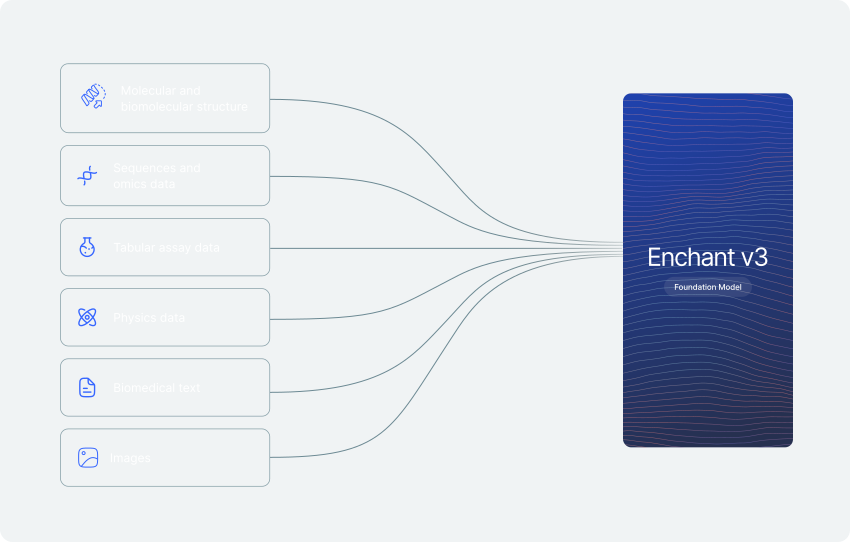
- Ingest diverse data: In drug discovery, we naturally encounter heterogenous data, and so building a multimodal model was always a must. Enchant was built to ingest heterogeneous inputs, including molecular and biomolecular structures, sequence and omics data, physics data, tabular assay data, and biomedical text, to produce predictions across diverse preclinical and clinical endpoints. As new laboratory data are produced, Enchant continuously learns from them, allowing optimization toward differentiated drug candidates.
- Access model scale: Chemical and biological training data for any data modality is limited; multimodality allows Enchant to reach large model scale by learning jointly across a wide range of data types and endpoints. As model scale is increased, Enchant gets better at predicting one endpoint by being trained on data from other related endpoints on different molecules.
- Break through data walls: Enchant's ability to transfer learning between different endpoints means we can predict ‘expensive’ endpoints from ‘cheaper’ ones, in vivo properties from in vitro data, and clinical properties from preclinical studies. Importantly, Enchant breaks through the “data wall” that has historically separated preclinical drug discovery from clinical development.
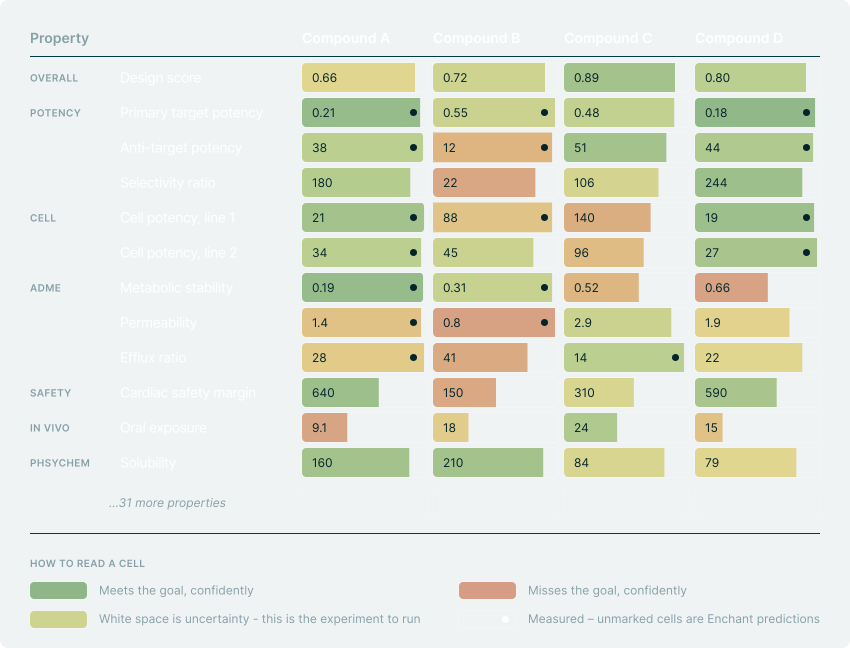
- Convert model outputs into actionable probabilities: Every Enchant prediction relies on cutting-edge uncertainty quantification which converts model outputs into actionable probabilities. These are then used to directly inform which lab experiments we choose to run.
Enchant has allowed us to explore AI-enabled improvements over the legacy drug discovery paradigm and accelerate our wholly owned and highly differentiated drug pipeline. Read on for concrete examples.
Success Stories
Enchant is Better Technology for Better Medicines
There is building better technology and there is proof it works. As a for-profit company we cannot share every detail of our proprietary technology and pipeline, but there are certain technological successes we are proud to share: Today we unveil Enchant v3, the next generation of our multimodal transformer model, built to predict preclinical and clinical properties in sparse data regimes, and an architectural leap from Enchant v2.
- Enchant is fine-tuned every week on hundreds of distinct molecular properties for use across our wholly owned and partnered drug discovery programs .
- Enchant is currently supporting an average of 12 million predictions per month in active discovery projects.
- Enchant accelerates our pipeline. Two success stories stand out – (1) IAM-C1 for CDK2/4 and (2) IAM217 for KIF18A – that begin to demonstrate how better technology leads to better medicines.
Success Story #1
IAM-C1 for CDK2/4
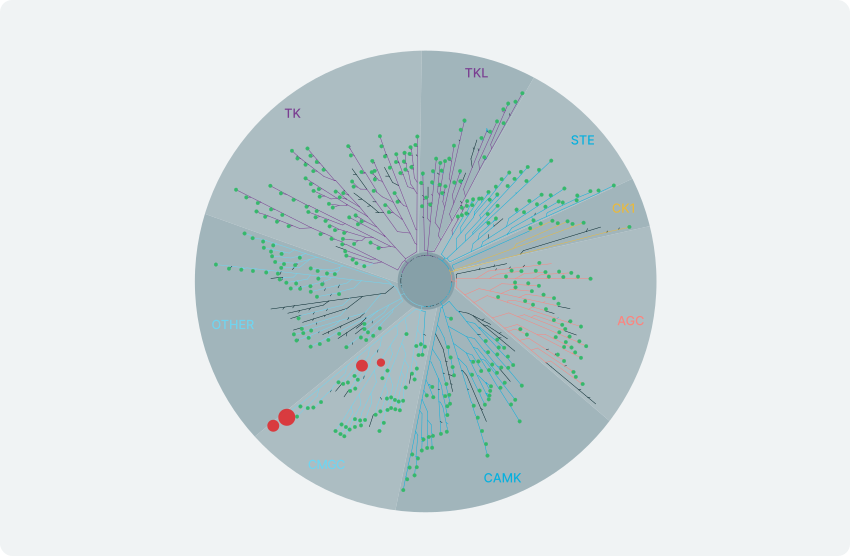
IAM-C1 is a CDK2/4 inhibitor with a highly differentiated selectivity profile, designed to target CDK2 and CDK4, two cell-cycle kinases that are frequently dysregulated in various cancers. IAM-C1 addresses one of the hardest problems in kinase drug discovery: intentionally designing highly selective polypharmacology. The molecule must potently inhibit CDK2 and CDK4 – blocking both a key cancer-driving pathway and a major resistance mechanism – while sparing other members of the CDK family. This is critical as inhibition of closely related kinases, such as CDK6, as well as essential CDKs including CDK1, CDK7, CDK9, and CDK11, can substantially narrow the therapeutic window. Achieving this precise profile is exceptionally challenging because certain ATP-binding pockets across the CDK family can be highly similar and others less similar. Using Enchant and high-throughput chemistry and biology we directly optimized for this hard-to-drug profile – resulting in IAM-C1.
Another common drug discovery challenge was an in vitro–in vivo disconnect. In vivo clearance was a critical optimization parameter, but the in vitro assays typically used as proxies did not reliably predict the behavior observed in vivo. Using Enchant, we could predict the in vivo endpoint directly, with greater accuracy than conventional proxy experiments.
Success Story #2
IAM217 for KIF18A
IAM217 is a highly differentiated KIF18A inhibitor being studied for triple-negative breast cancer, ovarian cancer, and other solid tumor indications. KIF18A is a mitotic motor protein on which chromosomally unstable tumors, like the therapeutic indications mentioned, can become selectively dependent. Although its inhibition may disrupt tumor-cell division while sparing healthy dividing cells, creating a clinically differentiated KIF18A inhibitor is a demanding, multiparameter challenge: potency and durable target engagement must be combined with strong pharmacokinetics, low drug-to-drug interaction risk, convenient dosing, and sufficient brain penetration to address intracranial disease.
We used Enchant throughout the design-make-test-analyze cycle to optimize all properties simultaneously and engineer IAM217. In preclinical studies, IAM217 produced approximately 90 percent regression of established intracranial tumors, while a presumed clinical-stage comparator produced no regression. It also achieved comparable tumor-growth inhibition at substantially lower total and unbound plasma exposures than the standard of care and demonstrated a clean drug-to-drug interaction profile, with pharmacokinetics supporting once-daily oral dosing. Collectively, these preclinical outcomes demonstrate how Enchant helped solve the interconnected design challenges required to advance a highly differentiated KIF18A inhibitor.
Beyond IAM-C1 and IAM217, we witness Enchant wins like these across all our drug discovery programs, with the ability to predict hundreds of endpoints each day. These results increase our execution speed and may increase the probability of success for our drug discovery programs. Ultimately, final proof comes in the form of human clinical data – both IAM-C1 and IAM217 are in IND-enabling studies and advancing toward IND.
Notably, these successes were achieved with earlier versions of Enchant. With Enchant v3, we take our ambitions to build an engine for new medicines to the next level.
New Enchant v3
Moving at ‘Iambic Speed’ to Achieve Predictability at Scale
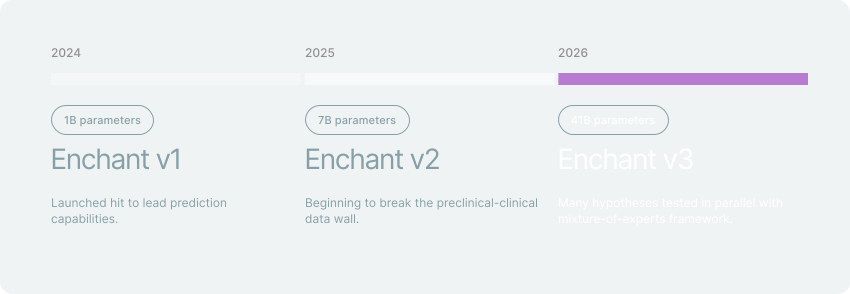
We completed training of Enchant v1 at 1 billion parameters in 2024 and Enchant v2 at approximately a 10-fold increase in model scale at 7 billion parameters in 2025.
Today we unveil Enchant v3 as an architectural leap over Enchant v2. Enchant v3 is scaled further to 41 billion parameters, leverages increased data scale, is trained on a still broader range of data modalities, and uses a mixture-of-experts architecture to achieve greater accuracy than earlier dense models.
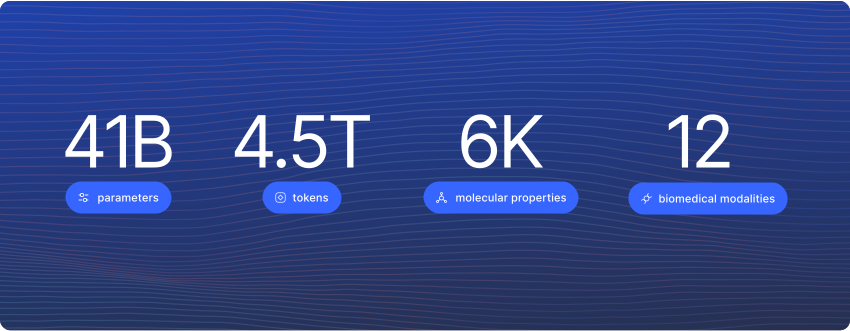
Throughout the progression of Enchant models, we have found that increased model scale correlates with improved prediction accuracy across a diverse range of preclinical and clinical endpoints. Multimodal scaling laws mean dollars spent convert predictably to accuracy. With Enchant, we are not only building transformational and translational drug predictions – we are building a sustainable business for innovative technology.
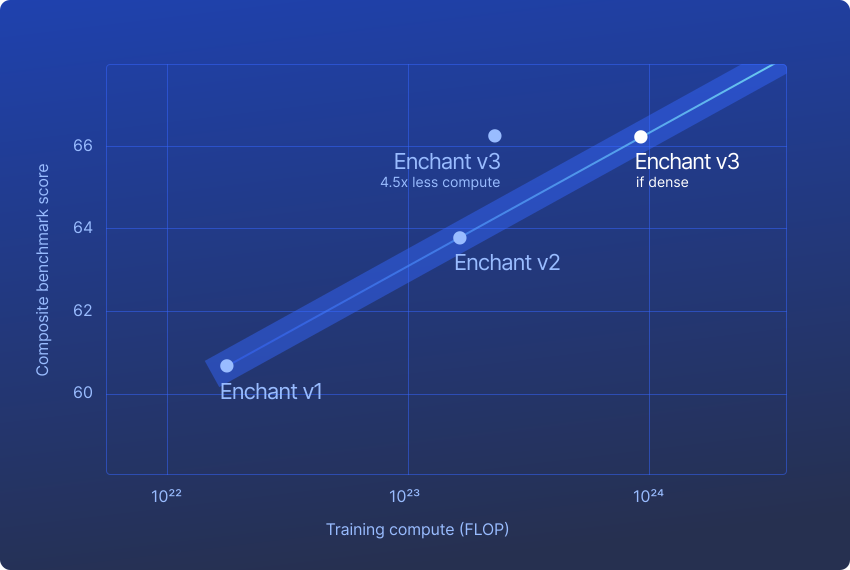
Enchant's predictability of scale, the power of our molecular superintelligence platform, enables two critical objectives:
- Increase probability of success: Every new drug program benefits from unified intelligence, the ability to test many hypotheses at once, and more accurately predict preclinical and clinical endpoints. We built Enchant to nominate lead and backup compounds with the hope of increased probability of success, even in sparse data regimes, as is often the case in drug discovery.
- Expand therapeutic areas: Our wholly owned pipeline is currently focused on difficult targets across various cancers, and our partnered pipeline goes beyond cancer into areas of immunology, inflammation, neurology, and gastrointestinal diseases. Enchant allows us to leverage proprietary, partnered, and public data to build a holistic approach that can predict preclinical and clinical properties for a wide range of targets and disease areas.
To appreciate how far we’ve come in relatively short time with Enchant v3, it may be helpful to see a historical timeline of Enchant v1 to now:
More to Come
Enchant Advances an Engine for New Medicines
Enchant v3 has completed training as of this report and every new Iambic drug program, internal or partnered, now benefits from Enchant v3 on day 1, including our drug discovery partners Takeda, Bayer, Revolution Medicines, and Lundbeck. As the model continues to scale, we expect to add more modalities, including peptides and adverse events, and move into more therapeutic areas.
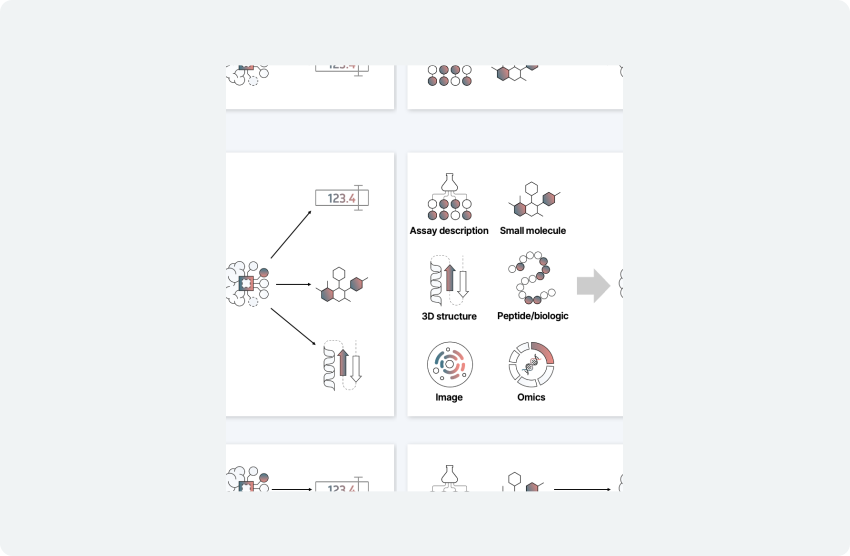
Enchant will continuously learn from experimental data, sharpening its predictions with each cycle from platform to bench and back. Because it was built for the purpose of drug R&D, to navigate vast chemical and biological space, at scale and in sparse data regimes, it can improve the probability of success at every stage of drug discovery and development. Predictability of scale increases our probability of success.
With Enchant we can systematically expand the boundaries of what is druggable and redefine how novel medicines are made to address the most urgent unmet patient needs. We can build an engine for designing, optimizing and developing new medicines -- repeatedly, with conviction, at scale.
More to come.